Dreaming of becoming the next Davey Coombs and leading your own motocross promotions or series? If you aspire to be the driving force behind a motocross race, understanding the intricacies of becoming a motocross race promoter is essential. From meticulously planning track layouts to navigating insurance requirements and adhering to AMA rules, let's explore the essentials of race promotion in the motocross world.
Understanding Your Responsibilities as a Motocross Race Promoter
As a motocross race promoter, you'll shoulder numerous responsibilities to ensure the safety and success of your event. These include:-
Track Preparation
The track serves as the focal point of any motocross race, making it imperative to prioritize its design, upkeep, and safety measures. This encompasses meticulous planning of the layout, strategic placement of obstacles, and consistent maintenance in the buildup to race day. Whether you're collaborating with an existing motocross track or managing your facility, clear communication with the owner regarding your expectations for track conditions is essential. If the track belongs to you, staying vigilant about its conditions in the days leading up to and on the day of the event is crucial for ensuring a smooth and safe racing experience. -
Personnel Management
From individuals managing admissions to flaggers and scorers, assembling a committed team to oversee different facets of the event is essential. Properly training your personnel and ensuring they have the necessary equipment are critical steps. It's vital to determine the required number of personnel and provide them with clear instructions, ensuring they understand their roles and responsibilities for executing a successful operation. -
Safety Measures
Offering medical personnel, restroom facilities, and food concessions is vital for ensuring the safety and comfort of both riders and spectators. While racetracks should present a challenge for riders, safety considerations are paramount. For spectators, the thrill of the action must be balanced with minimizing the risk of collisions. This involves thoughtful track design, installation of barriers, and cushioning of immovable objects. Learn more about these safety measures in our blog post titled "Motocross Track Rider and Spectator Safety" by Vroom Network. -
Race Operations
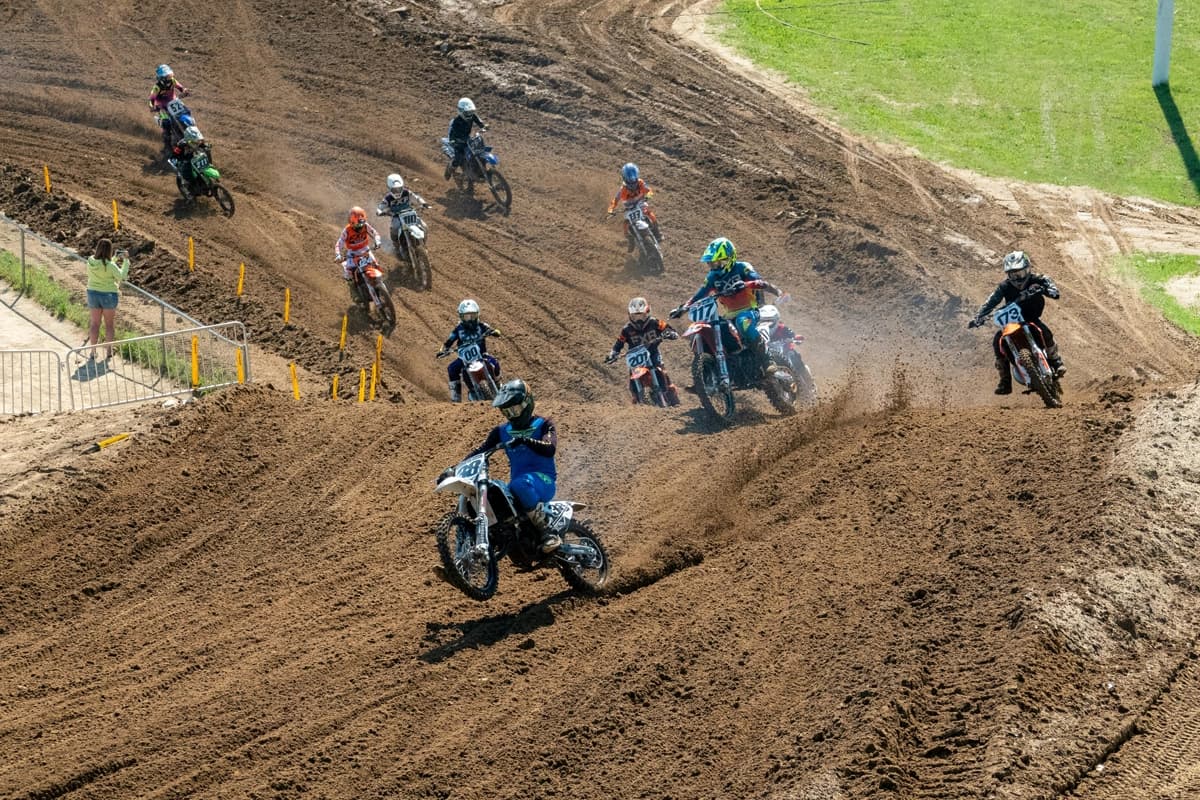
Efficiently managing registration, rider meetings, practice sessions, and races is essential for the seamless execution of a motocross event. This involves organizing rider sign-ups, verifying licenses, and assigning race numbers (if neccessary), while rider meetings communicate crucial safety and scheduling information. Practice sessions allow riders to prepare for the races ahead. During races, adherence to protocols for starting, flagging, scoring, and incident management ensures smooth operations. Starting races on time, flagging hazards, and accurately scoring results are key. Overall, effective management of these elements ensures a smooth, safe, and enjoyable event for all involved.
Costs and Budgeting for Motocross Race Promotion
Hosting a motocross event involves various costs, including:-
Track Preparation
Costs can vary widely depending on factors like track size, complexity, and existing infrastructure. A small local track might require a few thousand dollars for basic maintenance equipment and obstacle construction, while larger facilities with more elaborate layouts could require tens of thousands or even hundreds of thousands of dollars. $1,000 - $10,000 for small local events; $10,000 - $100,000+ for larger events with more elaborate layouts. -
Personnel
Budgeting for salaries or stipends for personnel like flaggers, scorers, and medical staff can vary based on the size and scale of the event. For a smaller local event, you might budget a few hundred to a few thousand dollars for personnel expenses. Larger events with more staff and higher stakes could require budgets in the tens of thousands of dollars. $100 - $1,000 for small local events; $1,000 - $10,000+ for larger events with more staff and higher stakes. -
Insurance
Liability insurance is crucial and costs can vary significantly depending on factors like coverage limits, event size, and location. Small local events might require insurance premiums in the range of a few hundred to a couple of thousand dollars, while larger events with more attendees and higher risk factors could require premiums in the tens of thousands of dollars or more. $500 - $5,000 for small local events; $5,000 - $50,000+ for larger events with more attendees and higher risk factors. -
Facilities and Services
The costs of amenities such as bathroom facilities, food stands, and spectator areas vary widely based on event size and location. For small local events, budgets may range from a few hundred to a couple of thousand dollars. Larger events with more attendees and higher expectations may require budgets in the tens of thousands or more. $100 - $1,000 for small local events; $1,000 - $10,000+ for larger events with more attendees and higher expectations for amenities. -
Awards and Prizes
Budgeting for trophies, plaques, and cash prizes adds to the overall cost of the event. Costs can vary depending on factors like the number of classes, the quality of awards, and the level of competition. For a small local event, you might budget a few hundred to a couple of thousand dollars for awards and prizes. Larger events with more classes and higher stakes could require budgets in the thousands or tens of thousands of dollars. $100 - $1,000 for small local events; $1,000 - $10,000+ for larger events with more classes and higher stakes.